
Wildlife, Nature, Happiness
5 September 2026
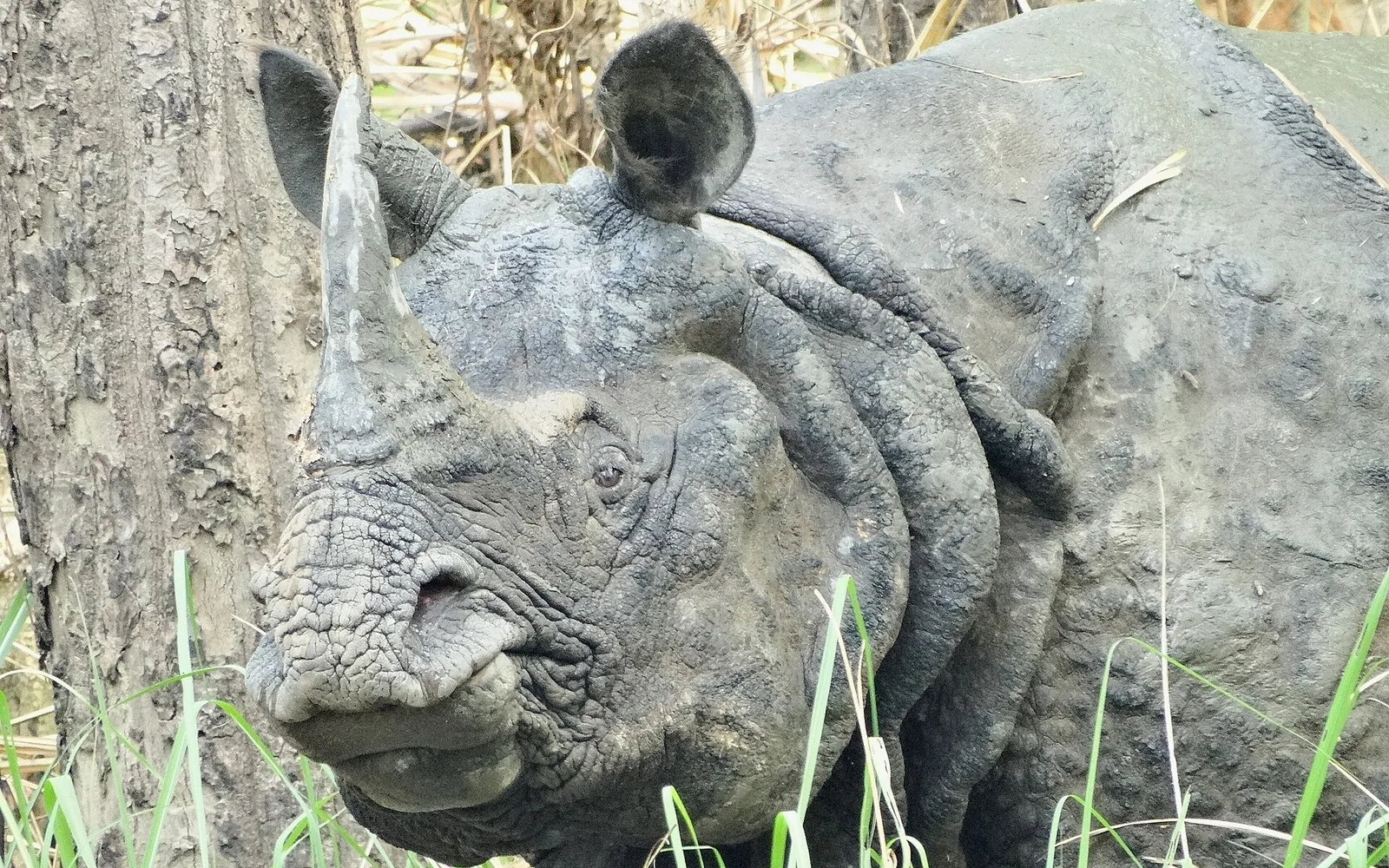
Everyone comes to Nepal for the mountains. The ones who also go south tend to say the jungle was the surprise of the trip.
Chitwan
Chitwan National Park, in the Terai lowlands, was Nepal's first national park and is a UNESCO World Heritage Site. It is the stronghold of the greater one-horned rhinoceros — the animal above — and also holds Bengal tigers, sloth bears, gharial and mugger crocodiles, and well over five hundred recorded bird species.
Rhino sightings are common. Tiger sightings are not, and anyone promising one is selling something. Go on foot with a licensed guide, or by jeep, or drift down the Rapti in a dugout canoe at dawn, which is the best of the three for birds.
Bardiya
Bardiya National Park, further west and much further from the airport, is what Chitwan was thirty years ago: bigger, emptier, and with the better tiger odds precisely because so few people make the journey. Budget a long day of travel each way and at least three nights there.
A conservation record worth knowing
Nepal's rhino population has climbed steadily from a few hundred animals, and the country has recorded several separate twelve-month periods with zero rhino poaching — an achievement very few range states anywhere can claim. The park fees you pay are part of how that is funded, as is the share of tourism revenue that goes to the buffer-zone communities living alongside the animals.
Practical
November to March is the comfortable season; by April the Terai is extremely hot. Pack long sleeves in neutral colours, insect repellent, and shoes you do not mind soaking. Then come back up to the valley, where the shower is better.
Photo: Rhinoceros - Chitwan National Park - Nepal - 02 (13907428086) by Adam Jones from Kelowna, BC, Canada, CC BY-SA 2.0, via Wikimedia Commons.
