Trek, Explore, Experience
5 September 2026
Permits, porters, and the last hot shower before the trail. Here is the part nobody puts on the poster — the logistics that actually decide whether a trek goes well.
Permits
Most routes need two pieces of paper: a TIMS card, and an entry permit for the national park or conservation area you are walking into — Sagarmatha for Everest, ACAP for Annapurna, Langtang National Park for Langtang. Restricted areas such as Upper Mustang, Manaslu and Dolpo need a special permit, a licensed guide, and in most cases a minimum group size. Rules and fees change; your agency will know the current position, and it is worth asking them rather than a forum post from three years ago.
Guides and porters
A guide is now required on most routes, and is good sense regardless. A porter carries around 20 kg and transforms the experience for anyone who is not used to walking all day under a heavy pack. Pay properly, make sure their insurance and kit are genuinely covered by the agency, and hand back anything warm you are not taking home.
Altitude
The single thing most likely to end a trek early. Climb high, sleep low. Allow acclimatisation days and take them even when you feel fine. Headache, nausea and breathlessness at rest mean go down, not push on. No view is worth it, and the mountain is not going anywhere.
The nights at either end
You will land tired, and you will come off the trail filthy and starving. The two nights that bracket the walk matter more than people expect. A kitchen, a washing machine, hot water that does not run out, and somewhere to leave the bag you do not want to carry to 5,000 metres — book those, and the rest of the trip gets easier.
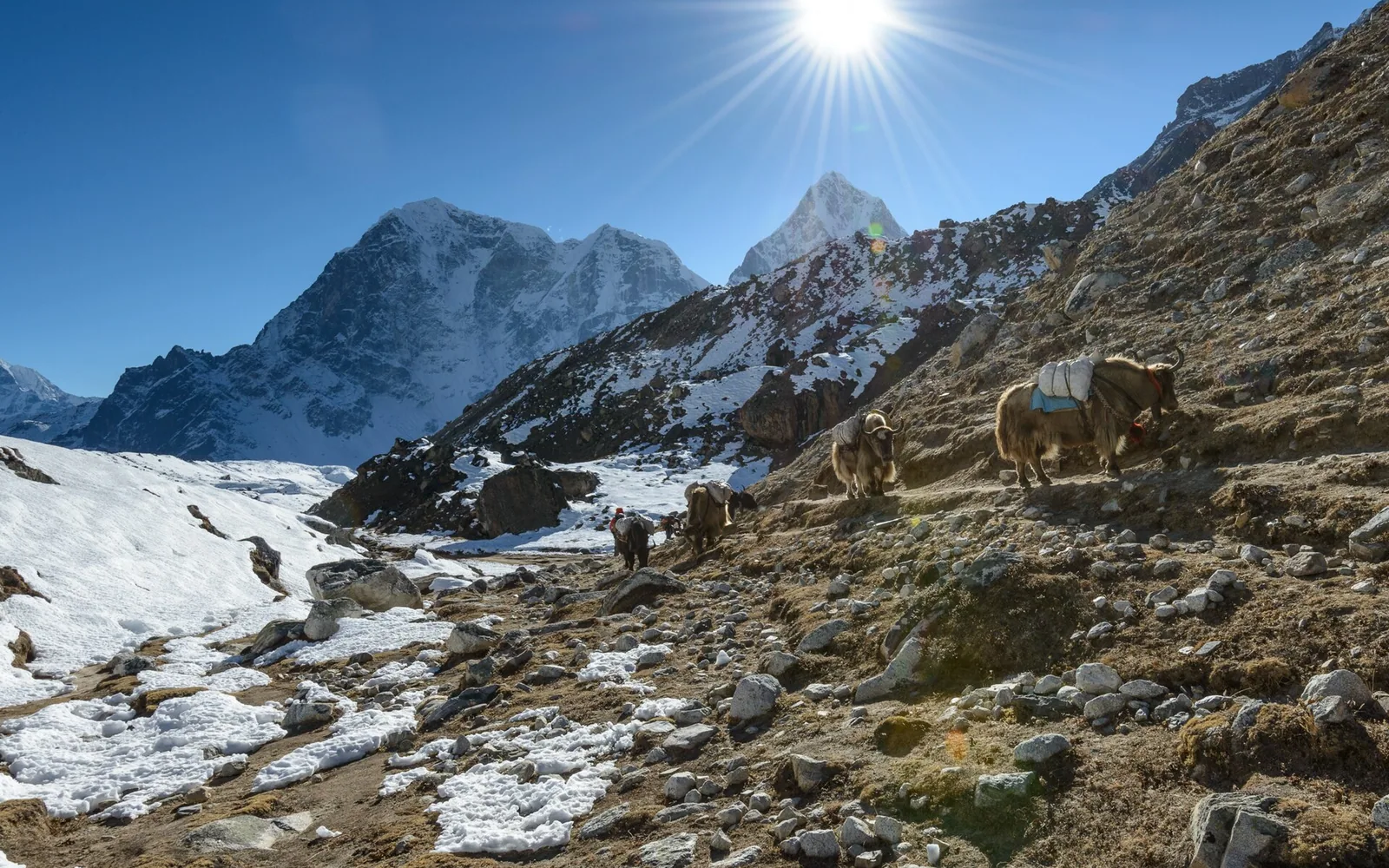
Photo: Going back from Everest Base Camp (15094746501) by valcker from Paris, CC BY 2.0, via Wikimedia Commons.
