
The Himalayas Are Calling
5 September 2026
Eight of the world's fourteen mountains above 8,000 metres stand in Nepal. Everest, Kanchenjunga, Lhotse, Makalu, Cho Oyu, Dhaulagiri, Manaslu and Annapurna — and the famous names are only the start of what is reachable from a single valley base.
You do not have to climb anything
This is the thing most first-time visitors get wrong. The great Himalayan experiences in Nepal are walks, not climbs. Everest Base Camp, the Annapurna Sanctuary and the Langtang valley are trekking routes: steep, long, high, but paths — no ropes, no technical skill, no summit.
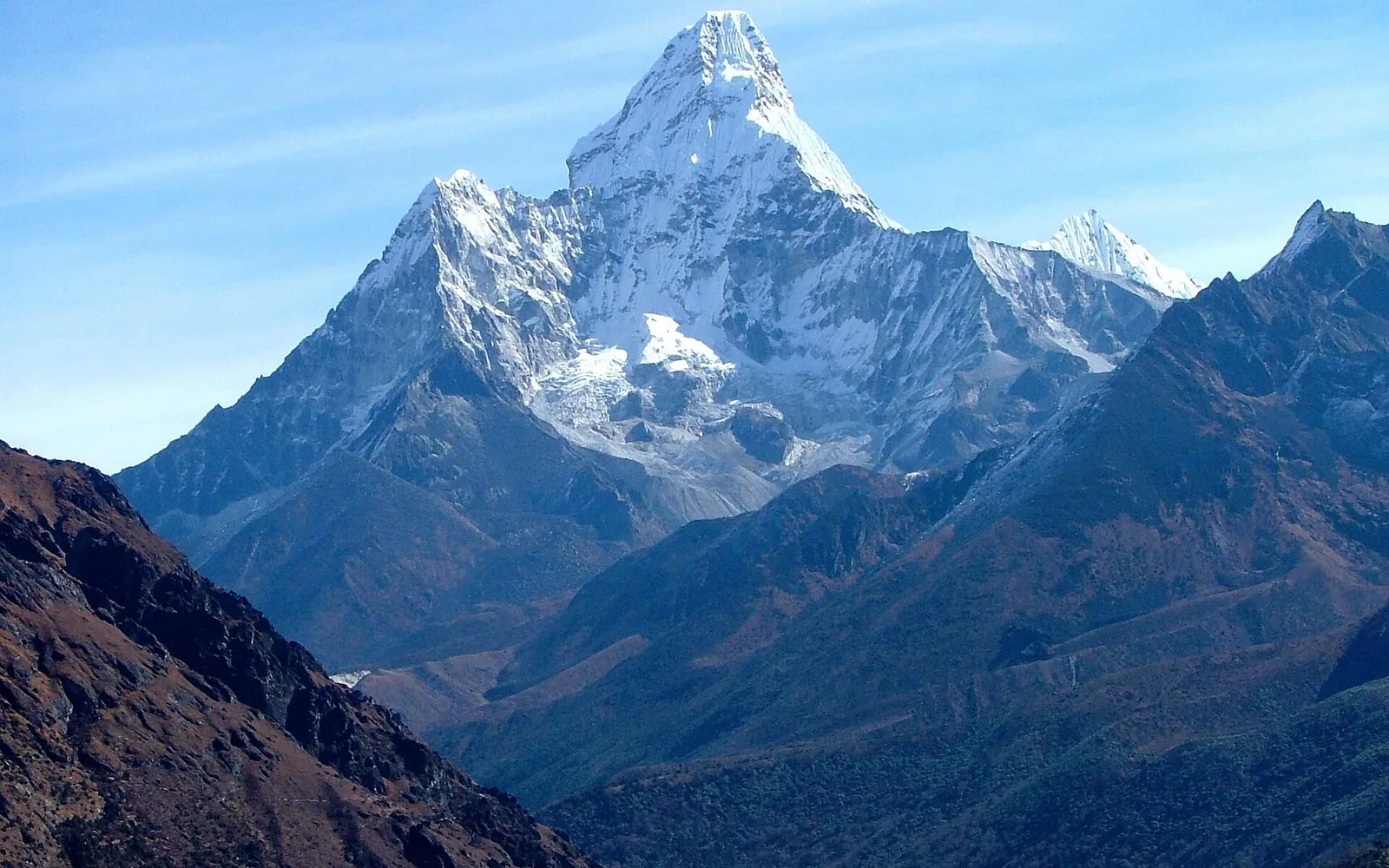
The mountain in the photograph above, Ama Dablam, is one of the most admired peaks in the range and almost everyone who sees it is on their way somewhere else, walking past it towards Everest.
The classic four
- Everest Base Camp — two weeks, a flight into Lukla, the highest and the most famous.
- Annapurna Sanctuary — around ten days from Pokhara into an amphitheatre of peaks.
- Langtang — the closest to Kathmandu, a week, and far quieter than its neighbours.
- Manaslu Circuit — longer and wilder, requires a guide and a restricted-area permit.
When
October and November give the clearest air of the year: cold nights, blue mornings, long views. March to May is warmer, hazier lower down, and brings rhododendron forests into flower. The monsoon, roughly June to September, closes the views in the main ranges — though the rain-shadow regions of Mustang and Dolpo stay dry and are at their best exactly then.
Both ends of the trip
Fly out early, walk for a fortnight, come back down to a bed you already know. Plenty of guests book the nights either side of a trek in the same flat and leave a bag with us in between. It is a better homecoming than a hotel lobby.
Photo: Ama Dablam by Lerian, Public domain, via Wikimedia Commons.
